ST JOHN'S PARISH
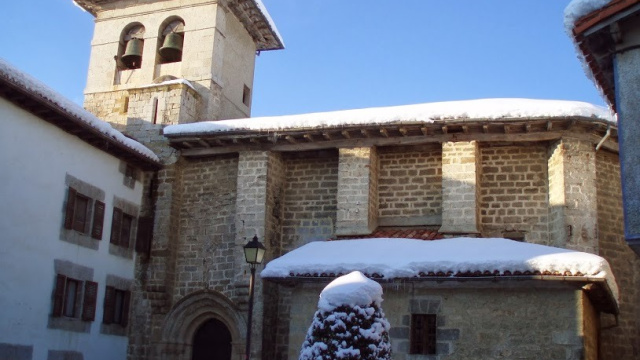
A Romanesque-Gothic building featuring buttresses, pointed arches and a 17th-century Baroque altarpiece, ideal for admiring religious art and historic archit...
A building dating from the transition between the Romanesque and Gothic styles. The exterior features well-crafted ashlar blocks in an alternating pattern, creating a low-rise, imposing structure supported by exquisite Romanesque buttresses. It is a single-storey building with four bays covered by a pointed barrel vault, with a chancel covered by a ribbed vault. The apse has an axial semicircular window with plant motifs on capitals decorated with foliage and a female head in a Romanesque style. The pointed-arch doorway with figuratively carved archivolts imitates the old doorway that was destroyed by fire. Several buttresses on corbels frame the entrance.
MAIN ALTARPIECE (Baroque, first half of the 17th century): On the predella, flanking the tabernacle, are figures of a holy bishop and Saint Anthony the Abbot. The tabernacle bears a relief of the Risen Christ flanked by Saints Peter and Paul. The central panel features the patron saint, Saint John the Baptist, with the apostles Peter and Paul in flanking niches. The Calvary occupies the attic, with a relief figure of the Eternal Father in the pediment above. On the left wall, two small Renaissance altarpieces (16th century), of greater artistic interest, have been relocated from either side of the chancel to the Gospel wall.
MAIN ALTARPIECE (Baroque, first half of the 17th century): On the predella, flanking the tabernacle, are figures of a holy bishop and Saint Anthony the Abbot. The tabernacle bears a relief of the Risen Christ flanked by Saints Peter and Paul. The central panel features the patron saint, Saint John the Baptist, with the apostles Peter and Paul in flanking niches. The Calvary occupies the attic, with a relief figure of the Eternal Father in the pediment above. On the left wall, two small Renaissance altarpieces (16th century), of greater artistic interest, have been relocated from either side of the chancel to the Gospel wall.
ST STEPHEN'S CHURCH
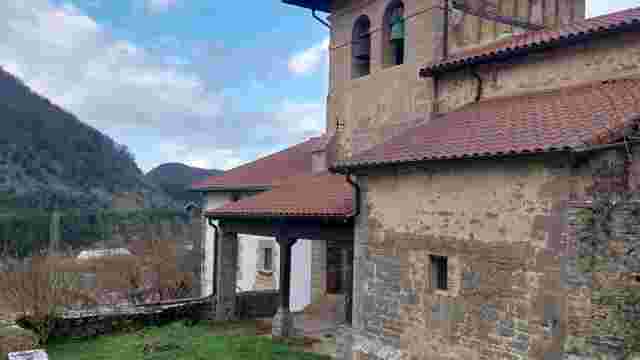
A church featuring a medieval tower and a bell dating from 1481, it is notable for its Gothic façade and 16th-century Romanesque altarpiece, which stand as a...
BRIDGE
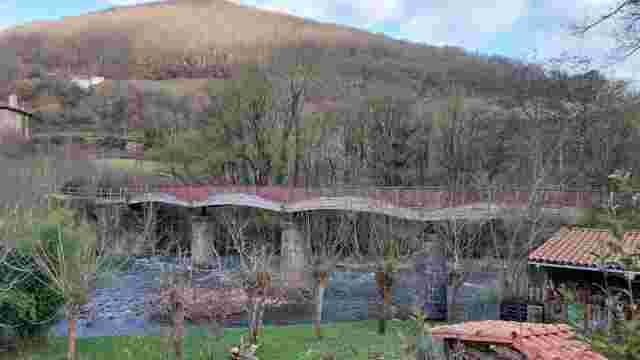
A historic bridge on the Green Route offers tourists a scenic journey through woods and meadows, linking railway history with natural beauty.
ST PETER'S CHURCH
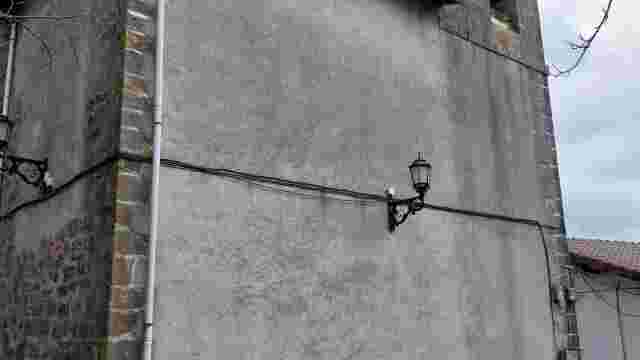
The church was rebuilt in the late 18th and early 19th centuries following its complete destruction during the War of the Convention (between 1793 and 1795).
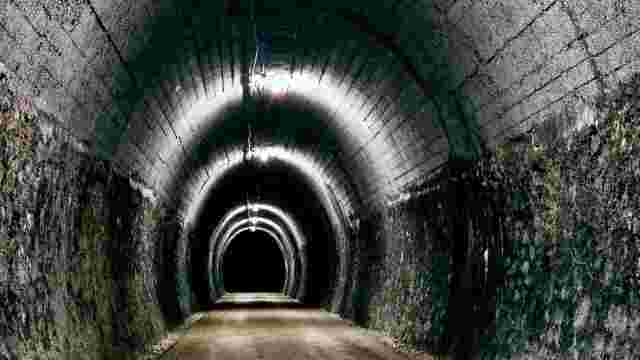
UITZI TUNNEL
An iconic tunnel for hikers and cycle tourists, offering mountainous landscapes, striking natural formations and a watershed, making it ideal for active tour...
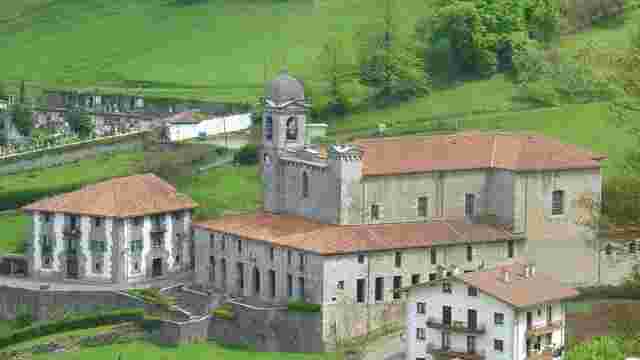
CHURCH OF ST MICHAEL
A church resembling a fortress, accessed via imposing staircases. Highlights include the Baroque altarpiece by Bengoechea and the Solomonic columns adorned w...
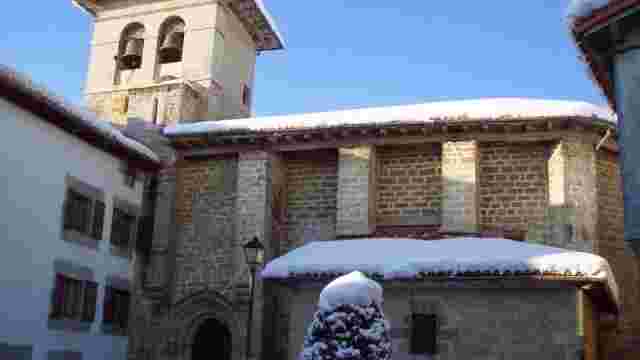
ST JOHN'S PARISH
A Romanesque-Gothic building featuring buttresses, pointed arches and a 17th-century Baroque altarpiece, ideal for admiring religious art and historic archit...
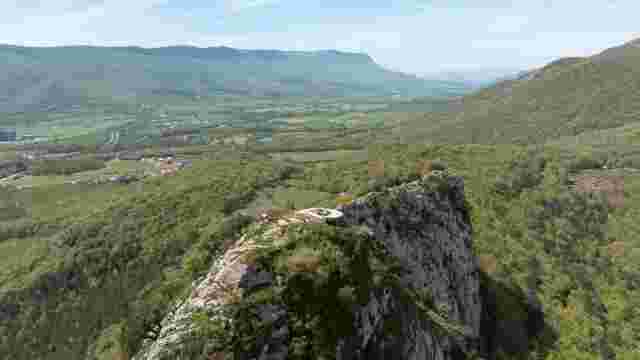
AIXITA
12th-century ruins with strategic views, signposted trails and part of an ancient defensive network featuring castles and towers. Ideal for historical walks.
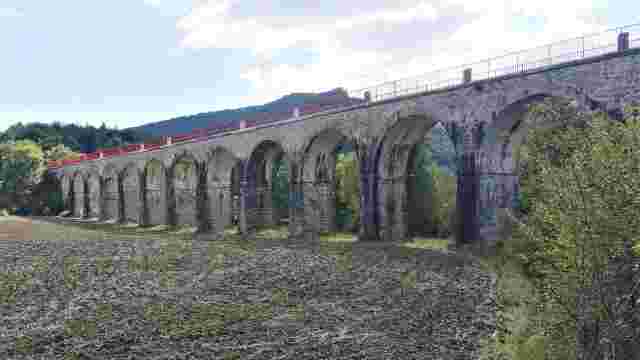
GULINA VIADUCT
An old railway viaduct with 18 stone arches, it is now a footbridge for walkers and cyclists, offering stunning views of the valley.
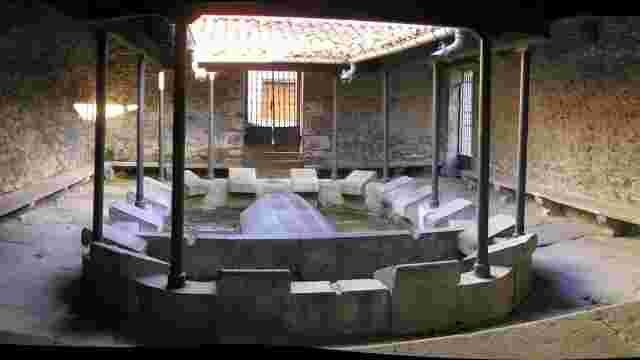
AIENEKO LAUNDRY ROOM
Built in 1863, it is an example of traditional architecture and is now a tourist attraction that hosts exhibitions, storytelling sessions and concerts in a u...
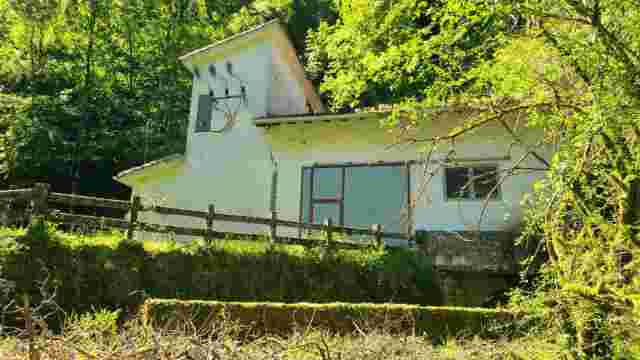
CABALLÍN HYDROELECTRIC POWER STATION
An example of industrial heritage set in a natural environment, ideal for appreciating the landscape and the history of traditional energy use.
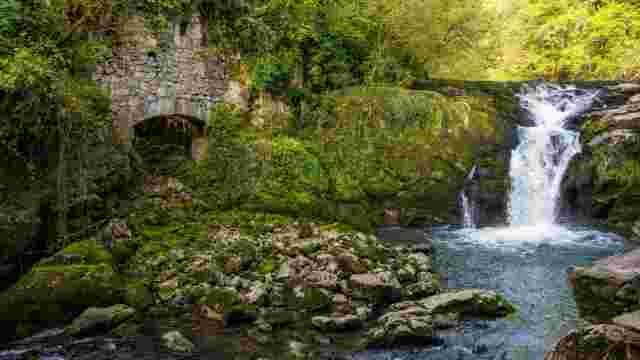
IXKIER WATERFALL
A waterfall surrounded by lush vegetation and the ruins of an old mill, the perfect spot to enjoy nature and local history.
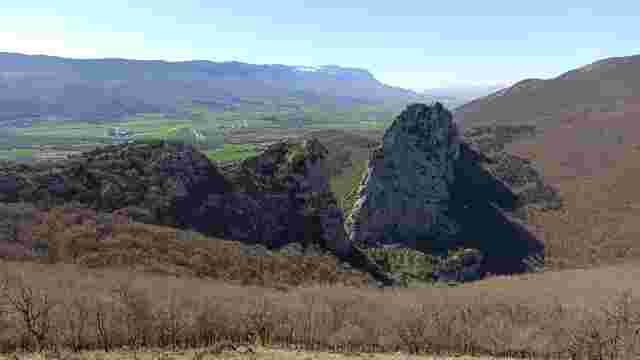
TWO SISTERS
Impressive limestone formations, the Plazaola greenway gorge, tunnels, cliffs and a wealth of natural beauty.
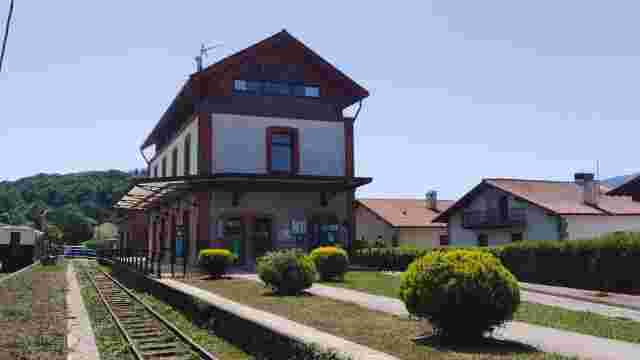
TOURIST OFFICE
At Plazaola Station, visitors can find tourist, cultural and culinary information, as well as a shop selling handmade goods and local souvenirs.
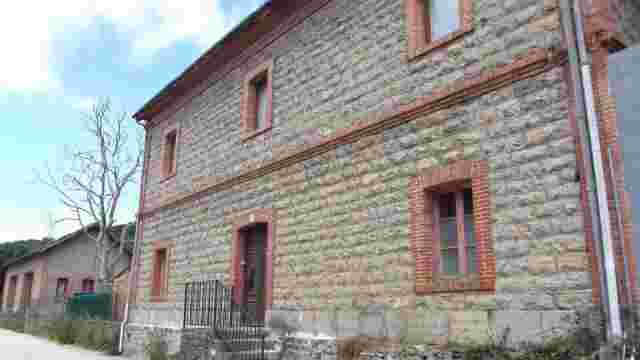
FORMER PLAZAOLA STATION
A historic building featuring stone and brick architecture, it offers a bar-restaurant set in natural surroundings with bridges and tunnels, making it ideal ...
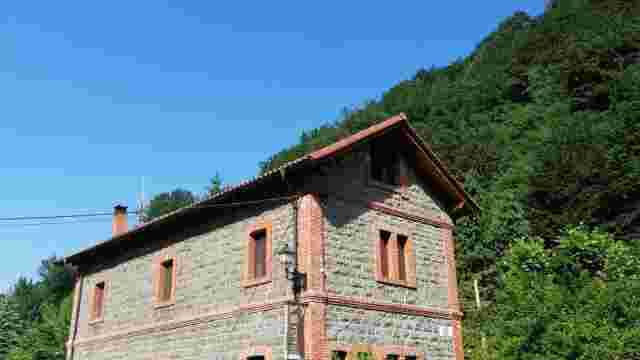
FORMER PLAZAOLA STATION
A historic station featuring 20th-century railway architecture, ideal for cycle touring and walking along the Greenway, and notable for its cultural and indu...
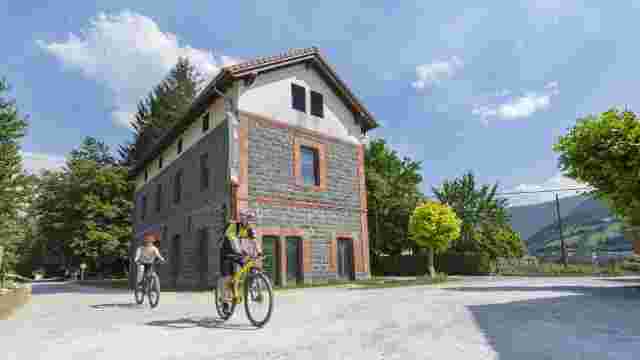
Leitza Station
This old railway station, with its traditional architecture, offers a glimpse into the area’s industrial and railway past, highlighting its historical and cu...
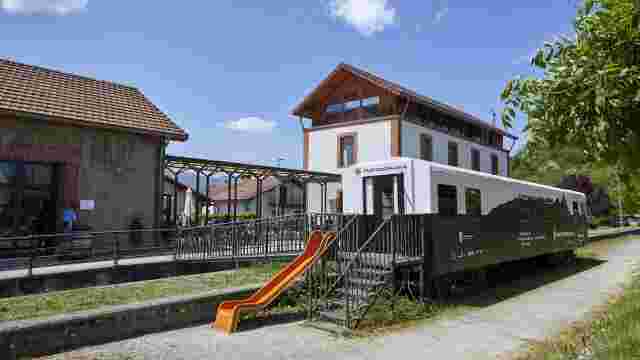
TRAIN STATION
A former railway line converted into a greenway, ideal for walking and cycling, with a visitor centre and event venues.