ST JOHN'S PARISH
A Romanesque-Gothic building featuring buttresses, pointed arches and a 17th-century Baroque altarpiece, ideal for admiring religious art and historic archit...
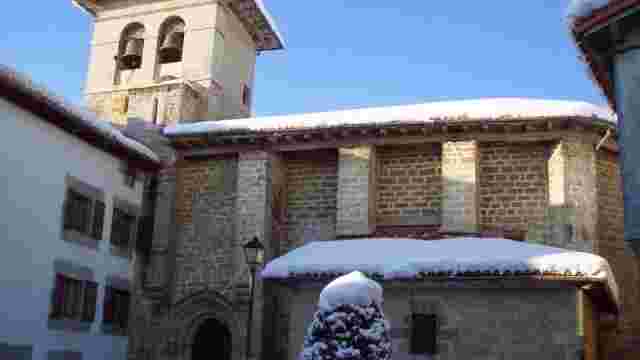
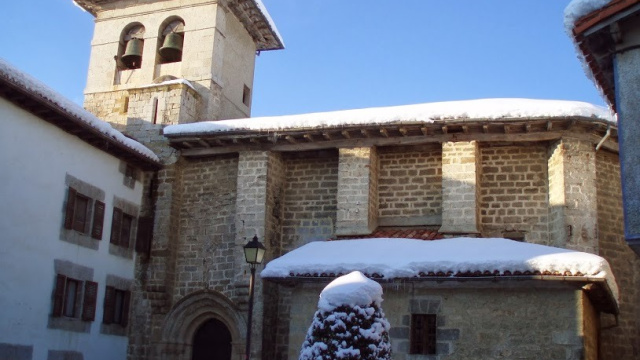
A building dating from the transition between the Romanesque and Gothic styles. The exterior features well-crafted ashlar blocks in an alternating pattern, creating a low-rise, imposing structure supported by exquisite Romanesque buttresses. It is a single-storey building with four bays covered by a pointed barrel vault, with a chancel covered by a ribbed vault. The apse has an axial semicircular window with plant motifs on capitals decorated with foliage and a female head in a Romanesque style. The pointed-arch doorway with figuratively carved archivolts imitates the old doorway that was destroyed by fire. Several buttresses on corbels frame the entrance.
MAIN ALTARPIECE (Baroque, first half of the 17th century): On the predella, flanking the tabernacle, are figures of a holy bishop and Saint Anthony the Abbot. The tabernacle bears a relief of the Risen Christ flanked by Saints Peter and Paul. The central panel features the patron saint, Saint John the Baptist, with the apostles Peter and Paul in flanking niches. The Calvary occupies the attic, with a relief figure of the Eternal Father in the pediment above. On the left wall, two small Renaissance altarpieces (16th century), of greater artistic interest, have been relocated from either side of the chancel to the Gospel wall.
MAIN ALTARPIECE (Baroque, first half of the 17th century): On the predella, flanking the tabernacle, are figures of a holy bishop and Saint Anthony the Abbot. The tabernacle bears a relief of the Risen Christ flanked by Saints Peter and Paul. The central panel features the patron saint, Saint John the Baptist, with the apostles Peter and Paul in flanking niches. The Calvary occupies the attic, with a relief figure of the Eternal Father in the pediment above. On the left wall, two small Renaissance altarpieces (16th century), of greater artistic interest, have been relocated from either side of the chancel to the Gospel wall.